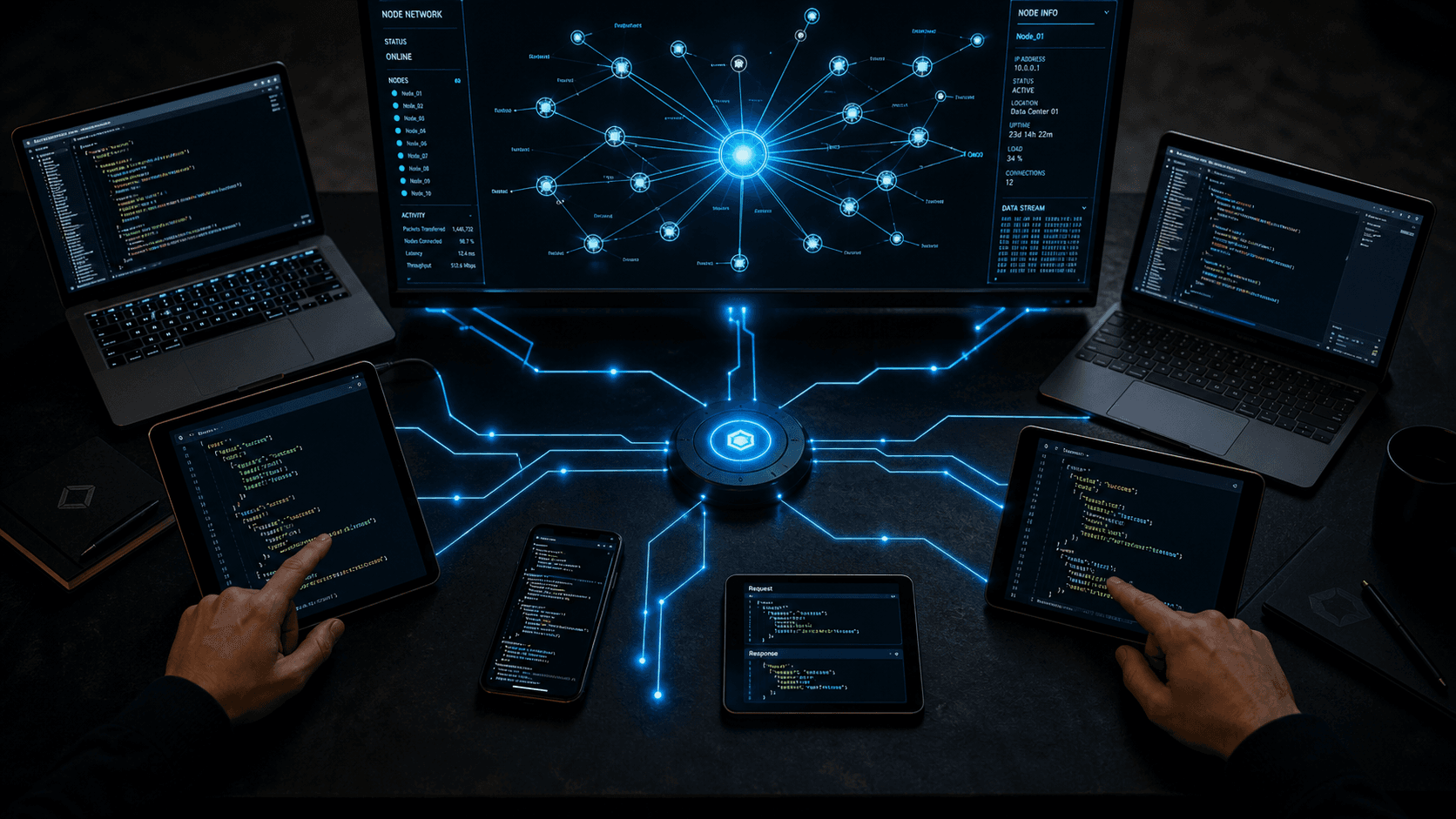
 AI generated
The Model Context Protocol (MCP) is a vendor-neutral standard for connecting AI agents to external systems through a defined set of capabilities. We built an MCP server for Crowdee so that any MCP-compatible AI assistant or agent framework can interact with the platform without a custom integration.
There's no separate service to stand up and no bespoke API client to build: the MCP server shares the same authentication and permissions as the rest of the platform, so there's nothing extra to configure. It stays in sync with the regular API automatically, since it's built on top of it. For exact connection details and setup instructions, see docs.crowdee.ai.
The MCP server covers the full breadth of the Crowdee platform, grouped into a few conceptual areas.
Identity and organization: an agent can confirm who it's acting as and which organization it's operating in — the starting point for any multi-tenant workflow.
Projects and files: agents can list, inspect, create, and update projects, and see which files are attached to a project. Those files are the primary inputs to verification and language technology runs.
Datasets: agents can list, inspect, create, and remove multi-modal dataset collections. Datasets are versioned, so an agent can create a dataset and then run pipelines against specific versions.
Verification pipelines: agents can browse the catalog of available verification pipelines, start a run against a project's files, and check on runs in progress — reading structured verdicts, confidence scores, and per-stage findings once complete.
Language technology pipelines: the same pattern applies to language technology pipelines — transcription, language identification, entity recognition, translation, and OCR.
Crowdsourcing: agents get full read-write access to the crowdsourcing layer — listing and creating crowd jobs, reviewing submitted answers, and accepting or rejecting them.
In short, if a capability exists in the regular Crowdee API, it's available to agents through MCP as well.
Beyond individual actions, the MCP server also exposes read-only reference data that agents can load once and reuse throughout a session, rather than looking it up repeatedly. This includes the full catalog of verification pipelines — their stages, requirements, and constraints — as well as the catalog of language technology pipelines. Having both available up front means an agent can understand the complete pipeline landscape before deciding what to run.
Every MCP request goes through the same authentication as the rest of the API. Agents can authenticate with an API key, a bearer token, or an active session — there are no additional credentials or separate tokens to manage.
MCP access also respects the same roles and permissions as normal API access. An agent acting on your behalf can never do more than the credentials it's using would allow through the regular platform, so there's no separate permission model to reason about or configure. For more detail on how API keys are scoped and how organization context is resolved, see our post on API keys and organization switching.
Connection is straightforward HTTP — no persistent socket or long-lived connection required, so it works cleanly behind standard proxies and load balancers. Full connection details are available at docs.crowdee.ai.
A typical agentic workflow starts by confirming identity and the active organization, then finding the right project, then checking which pipelines apply to that project's file types. From there, the agent starts a verification run and polls it until it completes, then reads the final verdict.
More sophisticated agents combine verification with crowdsourcing: after an AI pipeline stage flags uncertainty, the agent creates a crowd job to route the file to human reviewers, then checks the submitted answers and accepts or rejects them based on its own logic. This human-in-the-loop pattern can be fully orchestrated without a human operator touching the platform UI at all.
The design principle throughout is simple: the MCP surface should be a complete mirror of what a human operator can do via the platform. If you can do it through Crowdee, an agent can do it too.
Share this article: